

Rules & signs
Can You Use Your Phone While Driving in Ontario?
On this page
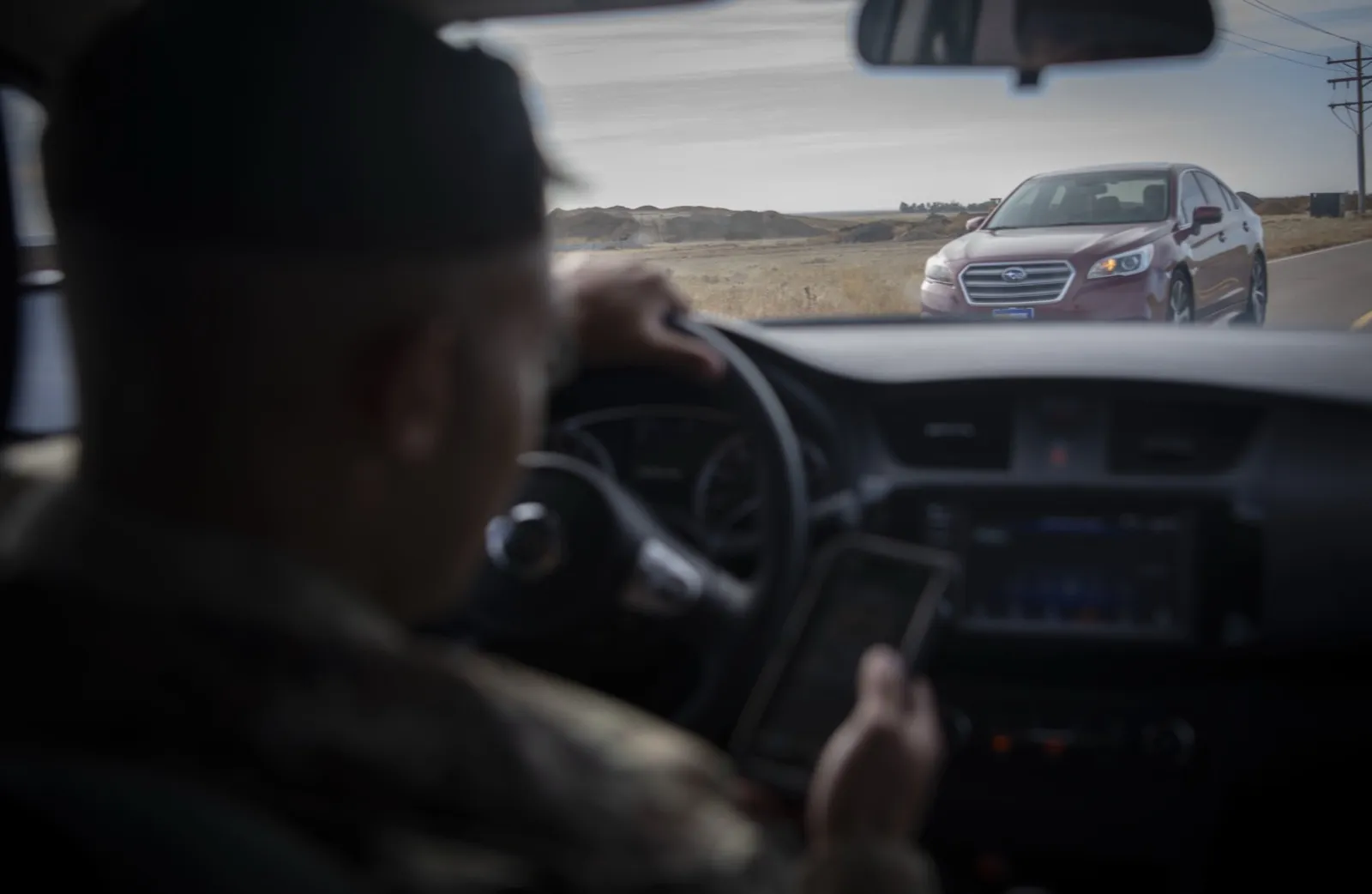
The short answer: not in your hand. While you are driving in Ontario, you cannot hold or use a phone to text, dial, browse or watch videos, and "driving" includes sitting at a red light. Hands-free is fine. The only time you may dial with a phone in your hand is to call 911 in an emergency.
What the law bans
Each of these is against the law behind the wheel, and that includes sitting in traffic or waiting at a red light:
- Text or dial on a hand-held phone (except to call 911 in an emergency)
- Play a game or use a tablet held in your hand
- Watch a screen that has nothing to do with driving, like a video
- Program a GPS by hand. Voice commands only.
The red light part is the one people miss. A red light feels like a pause, but in the eyes of the law you are still driving. It is an easy one to get wrong, so remember it in exactly that form.
What you can still do
- Talk hands-free through an earpiece, a lapel button or Bluetooth.
- Use voice commands or voice-to-text built into your phone or car.
- Follow a GPS screen that is built into the dashboard or securely mounted.
- Touch a securely mounted phone only to start, answer or end a call.
- Pull over and park somewhere safe, and then use your phone.
Hands-free does not mean risk-free
Going hands-free keeps you inside the phone law, but not out of trouble with every law. If any distraction leads you to put other people in danger, you can be charged with careless driving, and that includes a hands-free call. As of 2026, Ontario lists careless driving penalties of up to $2,000 in fines, up to six months in jail, and a licence suspension of up to two years.
Dangerous driving goes a step further. It is a criminal offence, with heavier penalties that include long jail terms.
The same goes for things the phone law does not mention at all: eating, drinking, grooming, smoking, reading, or reaching for something. None of them gets you a distracted driving ticket, but any of them can still lead to a careless or dangerous driving charge.
What it costs
The penalties climb with each conviction. As of 2026, Ontario lists these for fully licensed drivers:
- First conviction: a fine of up to $1,000, 3 demerit points, and a 3-day suspension
- Second conviction: up to $2,000, 6 demerit points, and a 7-day suspension
- Third and later: up to $3,000, 6 demerit points, and a 30-day suspension
If you settle the ticket out of court, the fine is $615. The "up to" amounts apply if you get a summons, or fight the ticket in court and lose. Fines change, so check the current amounts on Ontario's distracted driving page.
If you hold a G1 or G2
Your fine is the same, but you get no demerit points. You get a longer suspension instead:
- First conviction: 30 days
- Second conviction: 90 days
- Third conviction: your licence is cancelled and you are removed from the graduated licensing system
That is a lot to lose over one text.
Why it is taken this seriously
The Driver's Handbook gives the numbers:
- Distracted drivers kill about 100 people in Ontario every year, and injure thousands more. About one in four of the people killed is a pedestrian, cyclist or other vulnerable road user.
- Texting or browsing on your phone makes a crash about 10 times more likely.
- In one study, drivers busy with their phones travelled 28 metres further before reacting to a hazard than focused drivers did.
- Drivers aged 16 to 25 are the most likely to drive distracted, and the most likely to be killed or hurt in a distracted driving crash.
These figures come straight from the handbook you study for the G1.
Make it easy on yourself
The simplest fix is to put the phone out of reach before you start:
- Switch it off or to silent, and turn off notifications.
- Put it in the glove box, or in a bag on the back seat.
- Hand it to a passenger and let them answer.
- If something truly cannot wait, pull over somewhere safe first.
The short version
- No hand-held phone while driving, and that includes at a red light.
- Calling 911 in an emergency is the only hand-held exception.
- Hands-free, voice commands and a mounted GPS are fine.
- Hands-free can still lead to a careless driving charge if the distraction puts others in danger.
- As a G1 driver: a 30-day suspension, then 90 days, then your licence is cancelled.
All of this is handbook material, and the G1 is built on the handbook. Start a free round of rules practice and answer them until they feel obvious. Related reading: driving with a G1: what you can and can't do, demerit points explained and what to do when police pull you over.
Common questions
Can you touch your phone at a red light in Ontario?
Not a hand-held one. The law counts you as driving while you are stopped in traffic or at a red light, so holding or using a phone there is illegal, except to call 911 in an emergency. A securely mounted phone may be touched only to start, answer or end a call. For anything else, pull over and park somewhere safe first.
Is hands-free calling legal in Ontario?
Yes. You can use a hands-free device with an earpiece, lapel button or Bluetooth. But if any distraction, hands-free included, leads you to put others in danger, you can still be charged with careless driving.
What happens if a G1 driver is caught using a phone while driving?
The same fine as any other driver, but no demerit points. Instead there is a 30-day licence suspension for a first conviction and 90 days for a second. A third means your licence is cancelled and you are removed from the graduated licensing system.
Can you use your phone as a GPS while driving in Ontario?
Yes, if it is securely mounted. Set your destination before you leave, because while you are driving you may only program a GPS by voice.
Ready to practise?
Put it into practice with free, real-format questions and a plain-English explanation for every answer.
Practise G1 rules