

Rules & signs
What to Do When Police Pull You Over in Ontario
On this page
Getting pulled over feels stressful, especially with a new licence. The good news is that what the law asks of you is short, specific, and easy to remember. The G1 test asks about it too, so learning it now covers both.
Stopping the right way
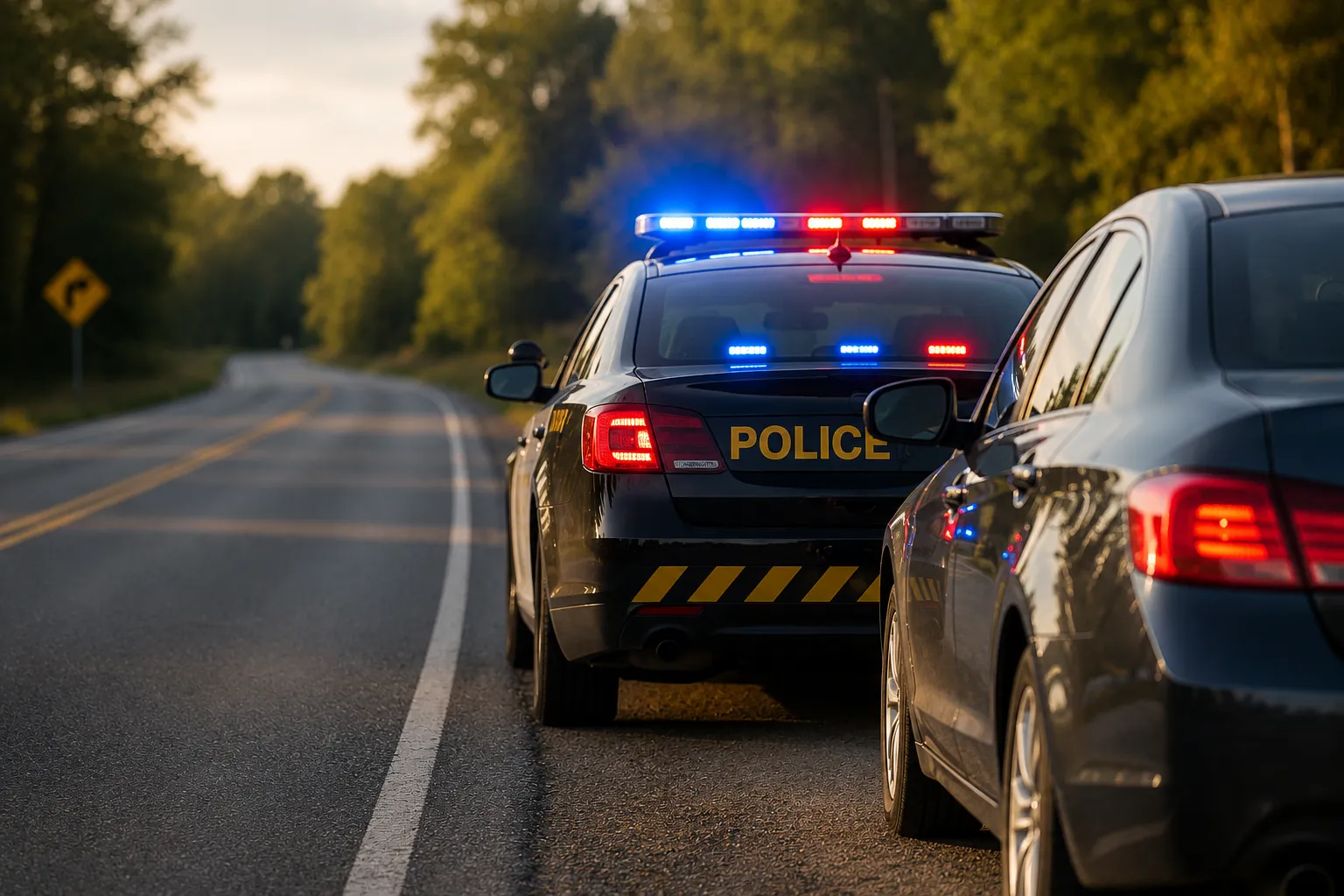
When an officer signals you to pull over:
- Pull over as far to the right as you safely can. Signal first, and look for a spot where you are out of the way of traffic.
- Come to a complete stop.
- Stay in your vehicle and wait for the officer to come to you.
That last step is the one people get wrong. Do not step out to meet the officer. Stay put.
The three documents you must produce
When the officer asks, hand over:
- Your driver's licence
- The vehicle permit (the ownership), or a copy of it
- Your insurance
Two things matter here. You must produce them right away when asked. And here is the myth worth killing: you do not have 24 hours to bring them in later. Plenty of drivers believe you do. You do not. That is exactly why you carry your licence any time you drive.
An officer's direction outranks the lights and signs
If an officer is directing traffic, you follow the officer, even when that means going against a red light or a sign. The test likes this one in that exact form: officer versus signal, officer wins.
Police can stop you to check for alcohol or drugs
Police can stop any driver to decide whether alcohol or drug testing is needed, and they run roadside spot checks. If you are stopped, you may be told to:
- Blow into a roadside screening device
- Perform physical coordination tests
If police believe a drug is involved, they can require an evaluation, and then a sample of blood, oral fluid or urine.
Refusing is not a way out. Failing or refusing any of those demands is a Criminal Code charge on its own, and it brings the same immediate 90-day licence suspension as registering over the legal limit.
What a reading means for you as a G1 driver
Your line is stricter than everyone else's. Every G1 and G2 driver, at any age, and every driver aged 21 and under, must have zero alcohol in their blood.
- Any alcohol at all as a novice driver: an immediate 24-hour roadside suspension. If convicted, a fine plus an escalating suspension: 30 days the first time, 90 days for a second time within five years, and on a third the novice part of your licence is cancelled, so you reapply for a G1 and start over.
- The "warn range" of .05 to .08: an immediate roadside suspension of three days, then seven days, then 30 days for repeats within five years, with an alcohol education or treatment program attached.
- Over .08, or a refusal: an immediate 90-day suspension. It takes effect at the roadside or the station, and it is separate from any criminal charge that follows.
Not stopping is the expensive mistake
Failing to stop for police carries seven demerit points, the top of the demerit table, above careless driving and above racing. As a G1 driver, nine points in a two-year period suspends you, so one of these leaves you two points from losing your licence.
The points are the small part. Failing to stop can also bring a fine, a licence suspension, or jail. If you are convicted and the court believes you were deliberately trying to get away, the suspension is at least five years, and longer again if anyone is killed or injured.
There is a milder version of the same idea: failing to obey an officer's direction is three demerit points.
Your vehicle can be checked too
A police officer or a Ministry of Transportation inspector can examine your vehicle, its equipment, and any trailer attached to it, at any time. If the vehicle turns out to be unsafe, it can be taken off the road until the problem is fixed.
The short version
- Signal, pull as far right as is safe, stop completely.
- Stay in the car and wait.
- Licence, permit, insurance, handed over right away. No 24-hour grace.
- An officer's direction beats lights and signs.
- Any driver can be stopped for alcohol or drug testing, and refusing is its own charge.
- Your alcohol limit as a G1 driver is zero.
Stops, penalties and licence rules come up on the G1 test regularly. Start a free round of rules practice and answer them until they feel obvious. Related reading: demerit points explained, the zero-alcohol rule for new and young drivers and driving with a G1: what you can and can't do.
Common questions
Do I have 24 hours to show my licence and insurance in Ontario?
No. That is a myth. You must hand over your driver's licence, vehicle permit (or a copy) and insurance as soon as the officer asks for them.
Can police stop me for no reason to check for alcohol?
Yes. Police can stop any driver to decide whether alcohol or drug testing is needed, and they also run roadside spot checks. You may be told to blow into a screening device or to perform physical coordination tests.
What happens if you do not stop for police in Ontario?
Failing to stop for police carries seven demerit points, the highest number on the table, plus a fine, a licence suspension, or even jail. If the court finds you were deliberately trying to get away, the suspension is at least five years.
Ready to practise?
Put it into practice with free, real-format questions and a plain-English explanation for every answer.
Practise the rules