

Rules & signs
When Do You Have to Stop for a School Bus in Ontario?
On this page
The short answer: when a school bus is stopped with its upper red lights flashing or its stop arm out, you stop. It does not matter whether you are behind the bus or coming toward it. There is one exception, and it is the part people mix up: on a road with a median, only traffic behind the bus has to stop.
Amber lights: get ready to stop
Flashing amber lights on top of a school bus mean the bus is about to stop to pick up or drop off passengers. Slow down and be ready to stop, whether you are behind the bus or coming toward it. On a road with a median, only traffic behind the bus needs to get ready.
Amber is the warning. Red is the rule.
Red lights or stop arm: stop
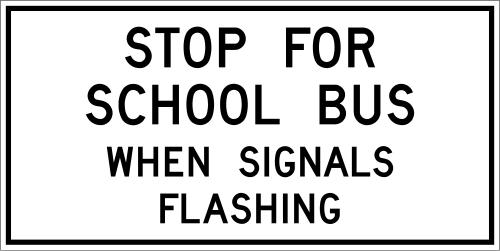
Once the upper red lights start flashing, you must stop. School buses also have a stop arm on the driver's side: a regular stop sign with flashing red lights at its top and bottom, which swings out after the red lights come on. Either one means stop.
Where you stop depends on which way you are coming from:
- Behind the bus: stop at least 20 metres back.
- Coming toward the bus: stop far enough away that children can get off and cross the road in front of you safely.
Then wait. Do not move until the bus starts moving, the red lights stop flashing and the stop arm folds away.
The median exception
This is the part people get wrong, so it is worth slowing down for.
On a road with a median, only drivers coming from behind the bus must stop. Traffic going the other way keeps moving.
A median is a physical divider between the two directions of traffic: a raised, lowered, earth or paved strip that vehicles cannot drive across. If nothing physical separates the two directions, there is no median, and traffic in both directions stops, no matter how many lanes there are.
Any road, any time
The school bus law applies on every road, whatever the speed limit and however many lanes it has. And it applies at any time of day, not only during school hours. A bus on a summer evening gets the same stop as one at 8 a.m.
School buses come in many sizes. Every one is chrome yellow and says "School Bus" on it. Size does not change the rule.
When a school bus stops without red lights
Here are two times a school bus stops without its red lights, so you have to watch for it yourself:
- Railway crossings. Every school bus must stop at every railway crossing, even ones with gates or signal lights. It does not use its red lights for these stops, so be ready to stop behind it.
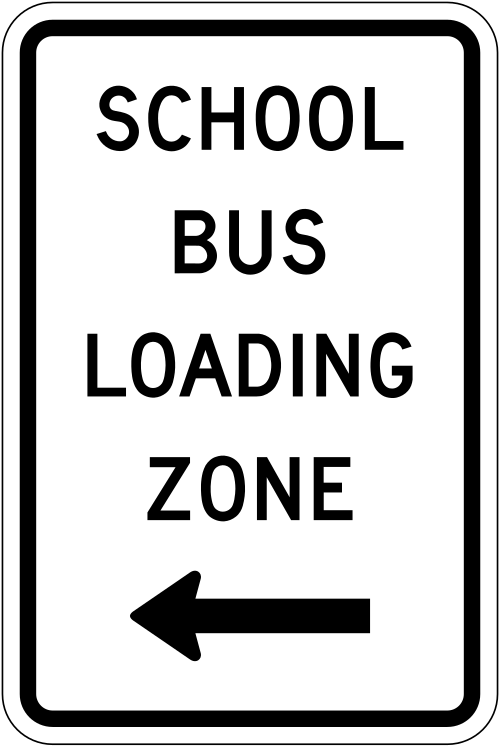
- School bus loading zones. Inside a marked loading zone, buses pick up and drop off children without the red lights or the stop arm. No flashing lights does not mean no children.
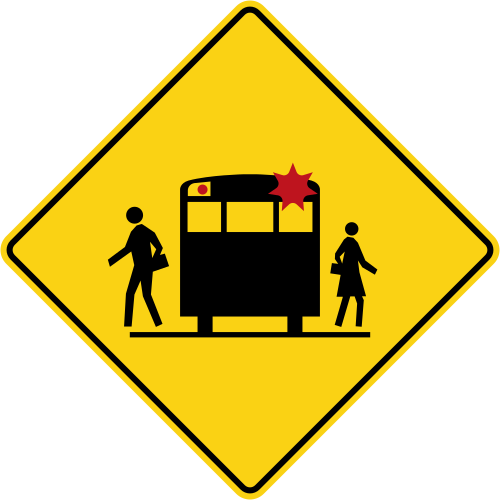
You may also see the yellow diamond at the top of this page. It warns that a hidden school bus stop is coming up. Slow down and watch for children and for a bus with its red lights flashing.
What it costs to drive past
Failing to stop for a school bus is one of the most serious offences on the demerit table: six demerit points, the same as careless driving and racing.
The fines are heavy too. As of 2026, Ontario lists $400 to $2,000 for a first offence, and $1,000 to $4,000 for a later one, which can also bring up to six months in jail. Fines change, so check the current amounts on Ontario's school bus safety page.
You can be charged even when no police officer sees it. Bus drivers and other witnesses can report a vehicle that passed a stopped bus, and camera technology can catch it too. The fine can then go to the vehicle's registered owner, though the demerit points and jail time cannot.
If you hold a G1 or G2
New drivers are handled differently. An offence worth four or more points, which this is, brings a Novice Driver Escalating Sanctions suspension on top of the fine. Within a five-year period, that is 30 days the first time, 90 days the second time, and on a third you lose your novice licence and have to start over. The points themselves are recorded as zero and do not count toward your points total.
The short version
- Amber lights: slow down and get ready to stop.
- Red lights or stop arm: stop, from either direction.
- From behind, stop at least 20 metres back.
- With a median, only traffic behind the bus stops. No median, everyone stops.
- Wait until the bus moves, the lights stop and the arm folds away.
- Any road, any time of day.
The median rule is the one to drill until it is automatic. See the school bus question with its full explanation, then start a free round of rules practice, which includes it. Related reading: right-of-way at intersections, demerit points explained and Ontario road signs explained.
Common questions
Do you have to stop for a school bus on the other side of the road in Ontario?
Yes, unless a median separates you from the bus. On a road with no median, traffic coming toward the bus must stop too, however many lanes there are. On a road with a median, only traffic behind the bus has to stop.
How far back do you have to stop behind a school bus in Ontario?
At least 20 metres. If you are coming toward the bus from the front, stop far enough away that children can get off and cross the road in front of you safely.
What do the amber lights on a school bus mean?
The bus is about to stop to pick up or drop off passengers. Slow down and get ready to stop (on a road with a median, only traffic behind the bus needs to). Once the red lights start flashing or the stop arm swings out, you must stop.
What is the penalty for passing a stopped school bus in Ontario?
A heavy fine, plus six demerit points for a fully licensed driver. As of 2026, Ontario lists fines of $400 to $2,000 for a first offence and $1,000 to $4,000 for a later one, which can also bring jail. A G1 or G2 driver pays the fine and gets a licence suspension, and the points are recorded as zero.
Ready to practise?
Put it into practice with free, real-format questions and a plain-English explanation for every answer.
Practise G1 rules