

Rules & signs
Right-of-Way at Ontario Intersections (Who Goes First?)
On this page
"Right-of-way" is really about one thing: who goes first, and who waits. It's not something you take. It's something you give. Here are the rules that decide it at the intersections you'll meet most.
Uncontrolled intersections (no signs or lights)
Some quieter intersections have no stop signs, yield signs, or traffic lights at all. Approach these carefully. The rule:
- Yield to any vehicle that gets there before you.
- If two vehicles arrive at the same time, the driver on the left yields to the driver on the right.
A simple way to remember it: when in doubt, the right goes first.
All-way (four-way) stops
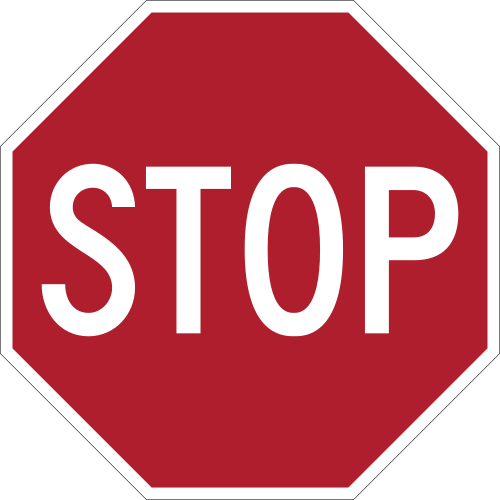
At a stop sign where every corner has one:
- The first vehicle to come to a complete stop goes first.
- If two vehicles stop at the same time, the vehicle on the left yields to the vehicle on the right.
Come to a full stop every time. Rolling through is both unsafe and against the law.
Yield signs
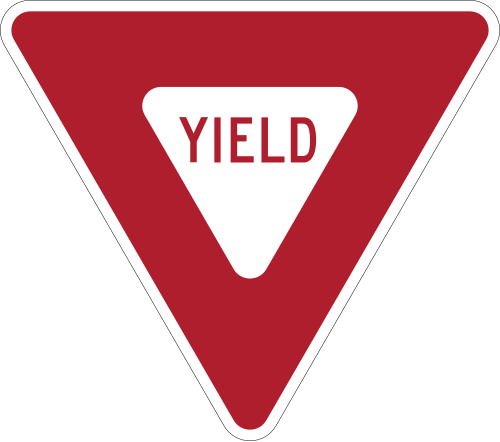
A yield sign asks you to slow down, look, and give way to traffic and pedestrians already in or approaching the intersection. Stop if you need to. Only proceed when there's a safe gap.
Roundabouts
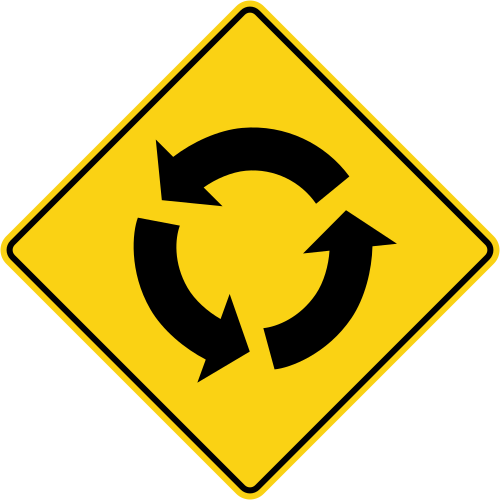
Roundabouts keep traffic flowing, but the right-of-way rule is strict and simple:
- Traffic already in the roundabout has the right-of-way.
- As you approach, slow down and look to your left, and yield at the yield line to any vehicle already circulating.
- Once you're in, keep moving, don't change lanes, and signal as you exit.
Turning left
When you're turning left, you must yield to oncoming traffic and to pedestrians crossing where you're headed. When two oncoming drivers both want to turn left, they pass to the left of each other after yielding.
The golden rule
Right-of-way rules exist to prevent collisions, not to prove who's "right." Even when the rules say you may go, make sure the other driver is actually letting you before you move. Yield freely. It's always safer than insisting.
Intersections are one of the most-tested topics on the G1. Practise intersection and right-of-way questions, or start a free practice round to see how you do. You might also like Ontario road signs explained.
Common questions
At a four-way stop, who has the right-of-way?
The first vehicle to come to a complete stop goes first. If two vehicles stop at the same time, the one on the left yields to the one on the right.
Who goes first at an intersection with no signs or lights?
At an uncontrolled intersection, yield to any vehicle that arrives before you. If two of you arrive at the same time, the driver on the left must let the driver on the right go first.
Who has the right-of-way in a roundabout?
Traffic already in the roundabout has the right-of-way. As you approach, slow down, look left, and yield to vehicles already going around before you enter.
Ready to practise?
Put it into practice with free, real-format questions and a plain-English explanation for every answer.
Practise intersections